If you have ever opened a Korean studio's website looking for prices, you probably closed it more confused than when you started. The Korean recording studio price you see quoted in one place might be hourly, in another it might be a flat package, and a third place may show no number at all and ask you to send a KakaoTalk message. Add an unfamiliar currency (KRW), a different culture around what's "included," and a language barrier on top, and you can see why foreign musicians sometimes walk into a session unsure whether they are about to pay for three hours or three hours plus mixing plus delivery files.
This guide is the orientation we wish every visiting artist had. It walks through how Korean studios usually price their work in 2026, what is typically bundled in, what is usually extra, and how to read a Seoul studio cost quote without surprises. We will not list specific numbers for our own room here — those live on our pricing page, where they stay current — but we will tell you exactly what to expect, what to ask, and how to budget. For the wider context of recording in Korea as an international artist, see our hub guide for foreign musicians in Seoul.
How Korean studios usually price their work
The most common model in Seoul is hourly. You reserve a block — three hours, six hours, sometimes a half-day or a full day — and the engineer's time is included in that rate. The hourly number you see almost always covers the studio room, the engineer, and the standard signal chain. This is how most tracking sessions are priced, and it is the easiest model to compare across rooms when you are shopping. Korea mixing mastering rates often sit inside the same hourly umbrella when the work is light, or get quoted separately when the project is bigger.
The second model is the package. Instead of an hourly rate, the studio quotes a fixed price for a defined deliverable: one finished song (record, mix, master), an EP (typically four to six songs), or a full album. Packages are popular because they give the artist a single number to budget against, and they often include a set number of mix revisions. The third model is the flat day rate — useful for live-band tracking, voice acting blocks, or location shoots where you want the room for the whole day without watching the clock. Studio NOL supports all three approaches; the current rates for each are listed on our pricing page.
What's typically included
A standard Korean recording studio price almost always covers:
- The engineer's time during the booked session
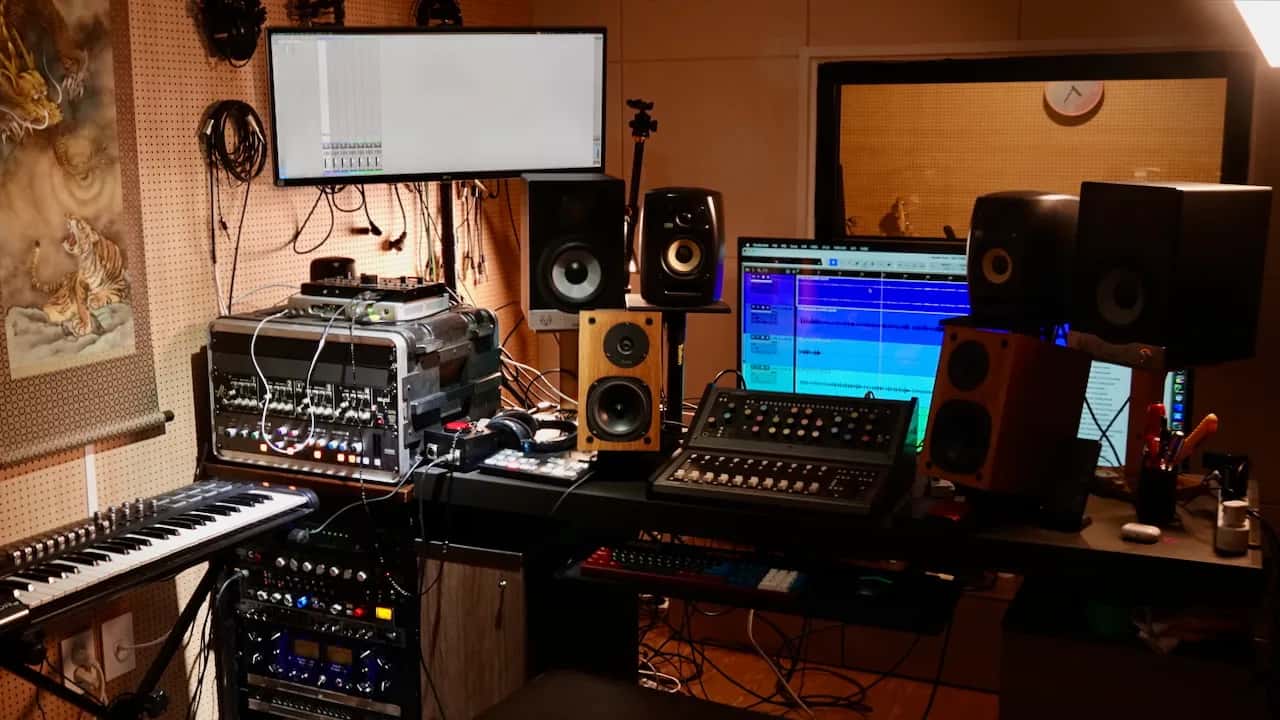
- The studio room and standard gear: monitors, console or interface, treated booth, and the house microphones
- A first-pass mix done in the same session or shortly after
- A basic master, suitable for streaming reference and rough distribution
- A final bounce delivered as WAV (commonly 24-bit / 48 kHz or 24-bit / 96 kHz on request)
This is the baseline most rooms in Seoul work to, and it is what we include by default at Studio NOL. If a quote you receive from any studio in Korea does not mention these items, ask before you book — it is the single best way to avoid a surprise on invoice day.
What's usually extra
Some items sit outside the standard bundle and get billed on top. The most common extras you will see on a Seoul studio cost breakdown:
- Additional mix revisions beyond the included round (often one or two are free, then per-revision pricing applies)
- An attended mastering session, where you sit in the room with the engineer instead of receiving a remote master
- Specialty outboard or vintage microphone rentals — flagship ribbon mics, tube preamps, vintage compressors
- Stem exports and full multitrack exports, especially for clients who want to remix or repurpose later
- Rush turnaround if you need a final mix or master in less than the studio's standard window
None of these are unusual or unreasonable — they are simply itemized rather than bundled, which is honest. Ask upfront which of them apply to your project.
Tips for foreign musicians
A few things will make budgeting easier as a visiting artist. First, arrive with a clear scope: how many songs, what deliverable (single, EP, album), what format (stereo master only, or also stems), and your target turnaround. The clearer your scope, the more accurate the quote, and the less you risk paying for hours you did not need.
Second, confirm file format expectations early. Most Seoul studios deliver WAV 24-bit at 48 or 96 kHz, but if you need a specific sample rate, DSD, or a particular stem layout for a sync deal, mention it before the session. Third, payments are in KRW (Korean won). Most studios accept Korean cards and bank transfers; some accept international wire, and a few accept foreign cards directly. At Studio NOL we are happy to confirm options over KakaoTalk or email when you reach out via contact. Finally, confirm English communication before you book — for the bigger picture on how that works, our hub guide covers it in detail.
Studio NOL pricing
Our up-to-date hourly and package rates are on our pricing page, where they stay current as gear and offerings change. We deliberately do not list specific numbers in story articles, because pricing pages move faster than blog posts and we would rather show you the real figure than a stale one. The pricing page covers tracking, mixing, mastering, and our common bundle deals for foreign musicians.
If you are also planning to rehearse or evaluate the full cost of a Seoul music trip, our Korean practice room booking guide covers how rehearsal rooms are priced separately from recording. Together with this pricing guide, those pieces give you a complete picture of Yeonsinnae studio pricing for everything we offer.
FAQ
Q: Are prices negotiable? A: Hourly rates are rarely negotiated, but most studios — including ours — offer better unit pricing on multi-song packages. If you are bringing an EP or album, ask politely about a bundle rate. It is normal and expected.
Q: Are there hidden fees? A: Reputable Korean studios are transparent. The most common surprises come from mix revisions and stem exports — both of which are perfectly fair extras, just easy to miss. Always ask upfront about revision rounds and deliverables.
Q: Can I pay with a foreign card or bank transfer? A: Most studios accept Korean cards and domestic bank transfers. International wire is often possible, and some rooms accept foreign cards directly. For Studio NOL specifically, reach out via contact or KakaoTalk and we will confirm what works for your country.
Q: Is tipping expected? A: No. Tipping is not part of Korean studio culture, and engineers do not expect it. A kind word, a recommendation to other artists, and a return booking are how clients show appreciation here.
Next steps
If this guide answered your pricing questions, the next step is simple: check the current numbers on our pricing page, and reach out via contact with your song count and target dates. For broader context on recording in Seoul as a foreign musician, the hub guide ties everything together — pricing, booking, gear, language, and how a session actually runs once you walk through our door near Yeonsinnae Station.