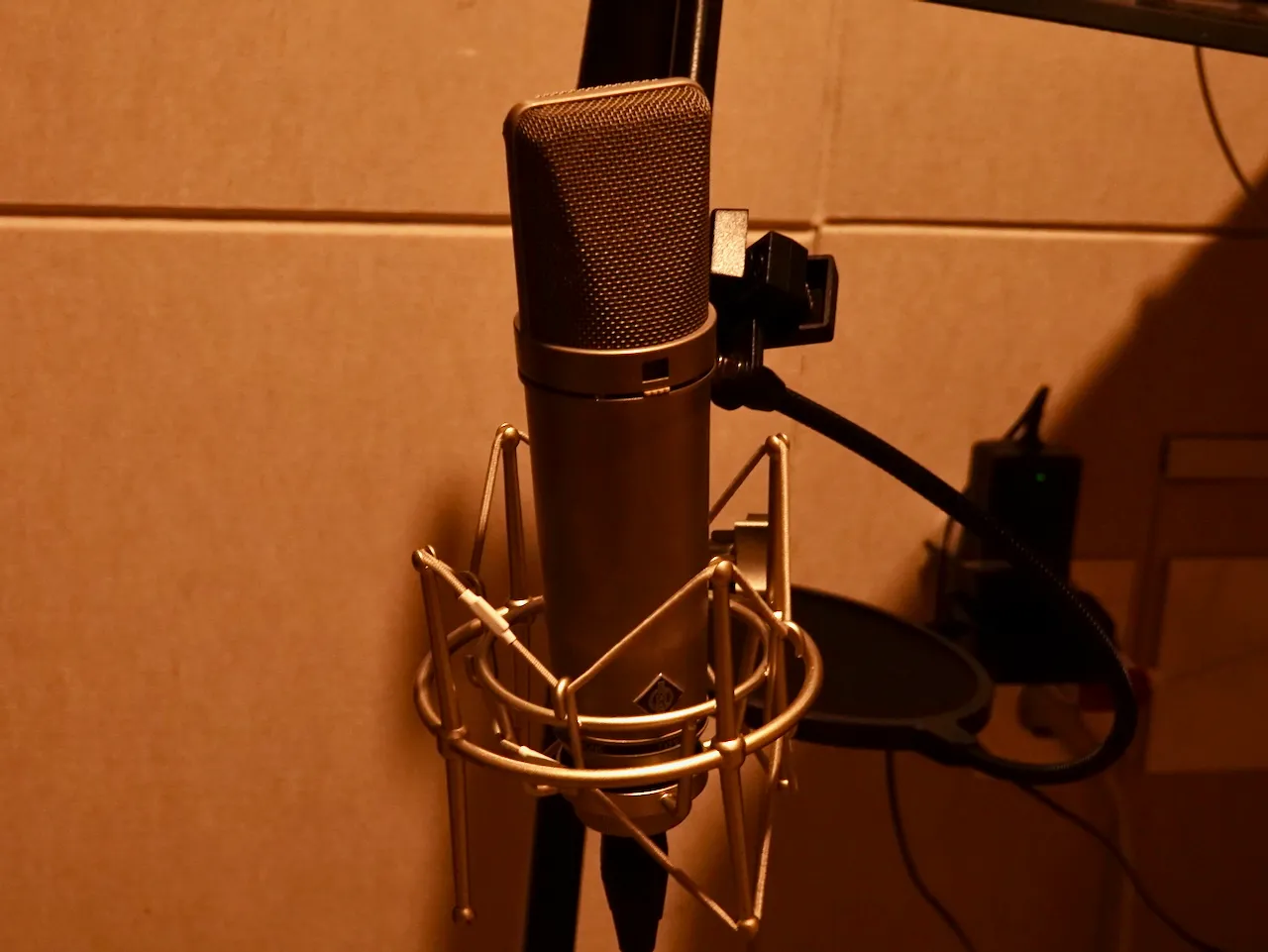
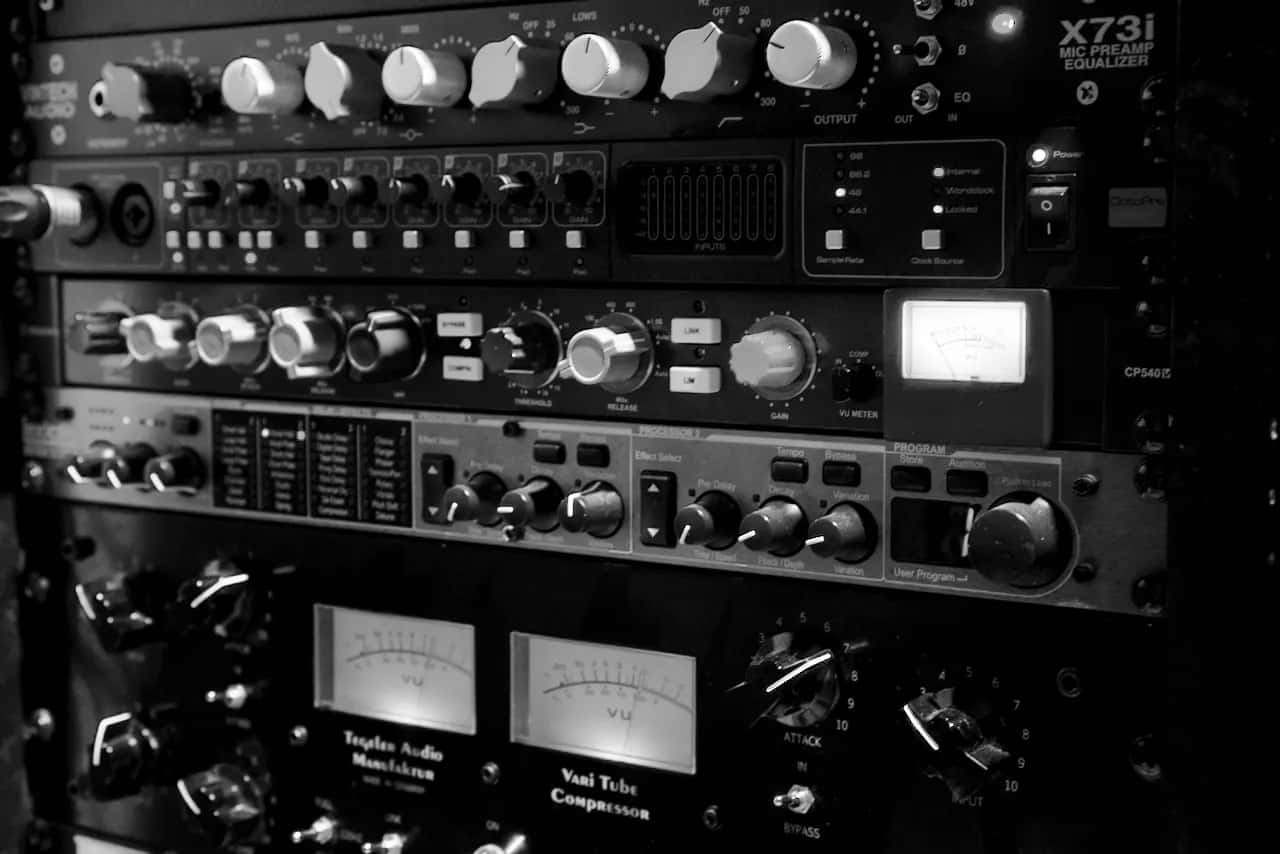

"The kick sounded huge, but when I play it with the overheads, it disappears!" (Huh?) This isn’t a ghost. It’s science: phase cancellation. Many beginners suffer through endless EQ tweaks because of this "invisible enemy." (Hair‑pulling!)
1. What is phase?
Think of waves from grade school. (Splash splash!)
- In‑phase: Two waves rise together and become bigger. (Sound gets louder, +6 dB. Yes!)
- Out‑of‑phase: One wave rises while the other falls, cancelling to 0. (Sound disappears, -∞ dB. Whoa!)
This happens whenever you record with multiple mics (drums, acoustic guitar, etc.). The kick reaches the kick mic first, and the overheads a tiny bit later. That tiny time difference causes the waveforms to misalign and cancel certain frequencies (usually low end). (Nom‑nom...)
2. The first check in drum mixing: flip the phase
The very first step in drum mixing is not EQ. It’s phase checking. (Essential!)
Kick phase check:
- Solo the overhead (OH) track. The kick will sound small. (Thump‑thump.)
- Turn on the kick track too.
- Click the kick track’s phase invert / polarity (ø) button. (Click!)
- Does the low end get fatter, or does it get weaker?
- Pick the fatter low end.
Snare top & bottom:
- The top mic moves inward when the head is struck, while the bottom mic moves outward.
- That means they are 180 degrees opposite by nature. (Like a mirror!)
- So the snare bottom mic should always be phase‑inverted, or the combined snare will sound thin and boxy. (Clang!)
3. The terror of comb filtering
It’s not just full cancellation. When phase is slightly off, some frequencies rise and others fall, creating a response that looks like a comb. That’s comb filtering, and it turns the sound into a weird, artificial “shhhh‑whoosh” (like a jet passing by).
You can’t fix this with EQ. (Nope!) If you boost what was cancelled, the phase problem gets worse.
4. So how do we fix it?
- Get it right at recording: Move the mic around to find the thickest sound. (Use the 3:1 rule, etc.)
- Phase invert button (ø): The easiest and most powerful fix in mixing. Try it and pick the better side. (Always listen!)
- Auto‑align tools: Plug‑ins that analyze waveforms and time‑align them automatically. (Pricey but convenient.)
Before you stack plug‑ins, get used to tapping that phase button. One tiny button can resurrect a dying beat. Don’t boost the low end with EQ—recover the low end that disappeared. (Solid!)
[Common Beginner Mistakes] 🌊
- "More mics = better": The more mics you add, the more phase problems you must manage. If you can’t control it, reduce the mic count.
- "Boosting kick lows with EQ": The low end is cancelling, and you keep adding +10 dB. The mix gets dirtier and your headroom disappears.
- "Never pressing the phase button": "It was recorded well"—and you move on. Especially on drums, skipping this can cut your mix energy in half.