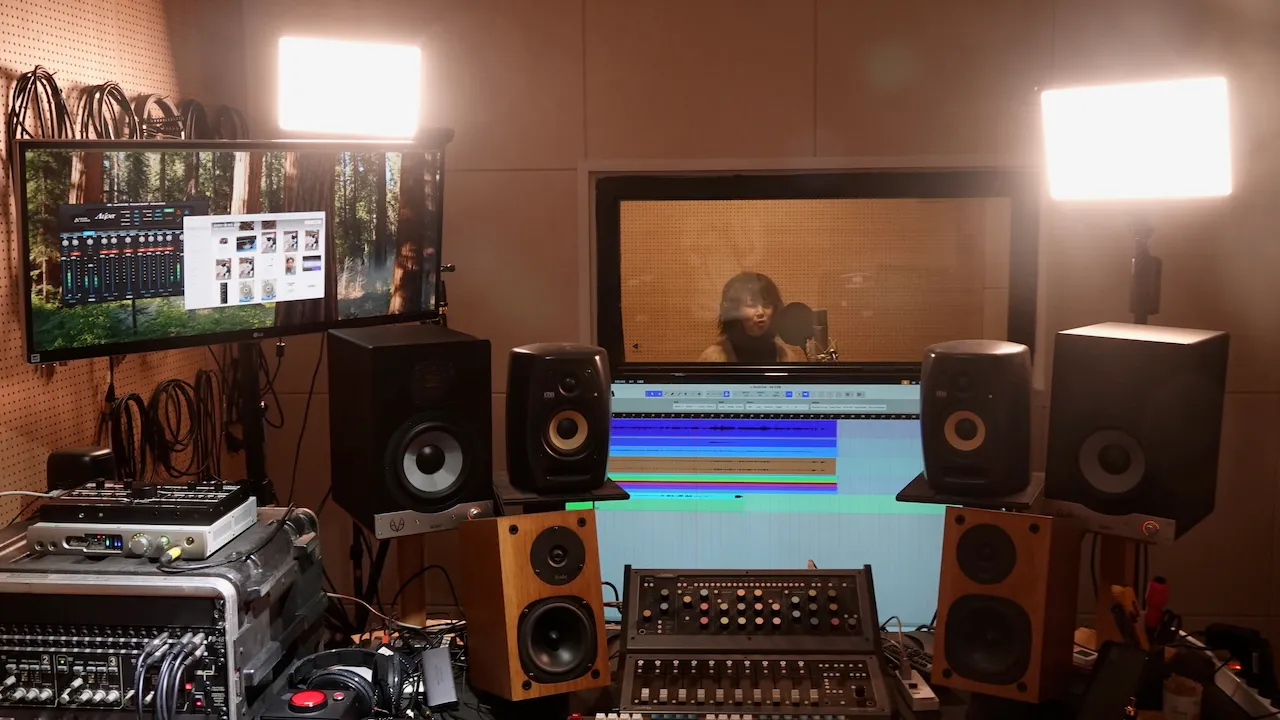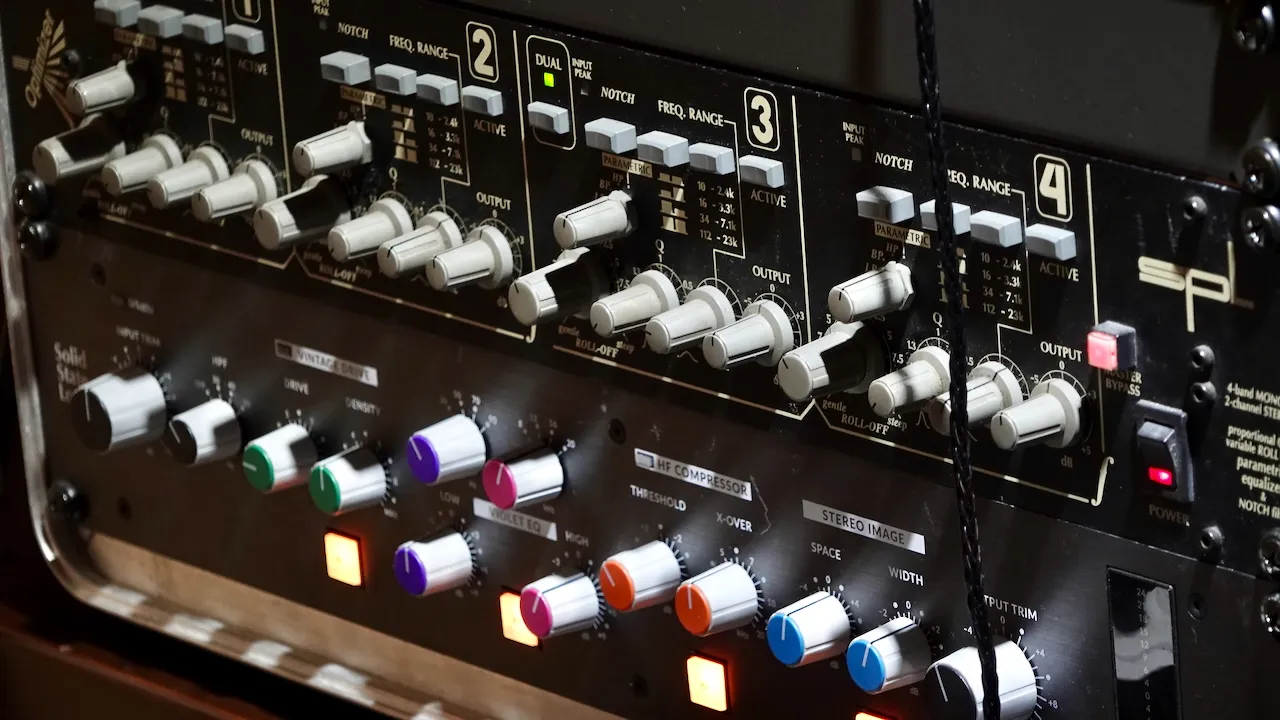

"Packaging matters as much as the content." (Gift!)
You made it this far. (Clap‑clap!) You prepped the ingredients (Editing), cooked the flavor (Mixing), and plated it nicely (Automation). Now before serving, you polish the plate and wrap the gift.
That is mastering. (Final dot!)
Many think mastering is “the magic that makes it insanely loud.” But the essence is balance and translation—making sure your music sounds consistent on earbuds, cars, clubs, phones. (Everywhere!)
1. Mixing vs mastering (micro vs macro)
- Mixing: horizontal relationships. You manage battles between kick and bass, vocal and guitar—inside the multitrack world. (Busy!)
- Mastering: vertical relationship. You work on the final 2‑channel stereo and shape the overall tone and loudness. (Clean!)
Key: If the mix is broken, mastering can’t save it. “I’ll fix it in mastering” is the most dangerous thought. (Firm!)
2. Simple self‑mastering chain ⛓️
Here’s a minimal but powerful order for home users:
① Linear Phase EQ
- Less phase distortion than regular EQ, great for mastering.
- Low Cut: cut below 30 Hz to remove useless energy. (Slice!)
- Tone shaping: if it’s too dark, add 1 dB of high shelf; if too sharp, slightly reduce around 2 kHz. (0.5–1 dB moves!)
② Bus Compressor (Glue)
- Glues all instruments together.
- Settings: Ratio 1.5:1–2:1, Attack 30 ms (slow), Release Auto.
- Keep gain reduction around 1–2 dB.
③ Limiter: the final gate
- The most important tool for loudness.
- Ceiling: set to ‑0.1 dB or ‑1.0 dB. (Streaming safe)
- Threshold: lower until you hit desired loudness without audible distortion.
3. The loudness war is over 🏳️
In the past, everyone tried to be louder, killing dynamics. Now platforms like YouTube, Spotify, Apple Music normalize volume.
Even if you push to ‑6 LUFS, YouTube will turn it down to around ‑14 LUFS. Over‑pushing just destroys dynamics, so when they turn it down, it sounds weak and flat.
Conclusion: Aim around ‑14 to ‑9 LUFS. Don’t chase red lights. Dynamic music is more moving.
4. Final export 📦
- Format: lossless WAV (24‑bit / 48 kHz) is standard.
- MP3: for email previews or guides (320 kbps recommended).
- Dithering: when exporting 24‑bit to 16‑bit, apply dithering once at the very end. (Final polish!)
Epilogue: trust your music
This 23‑part journey is complete. (Well done!) From EQ and time and space to motion and mastering—you now hold the tools.
But remember: The best mix starts with a good song and great performance. Technology only assists.
Studio NOL’s course ends here, but your music starts now. Don’t be afraid—turn the knobs. May your music ring across the world.
– Studio NOL –
[Common Beginner Mistakes] 🏁
- "Fixing the mix in mastering": The snare is small, so you boost highs in mastering. Then everything else gets harsh too. Go back to the mix.
- "Obsession with loudness": You smash the limiter to be louder than your neighbor. The sound turns into a brick and ears get tired fast. Quality beats volume.
- "Ignoring monitoring": You master in an untreated room. Then on other speakers, bass explodes or highs vanish. Always check multiple systems.