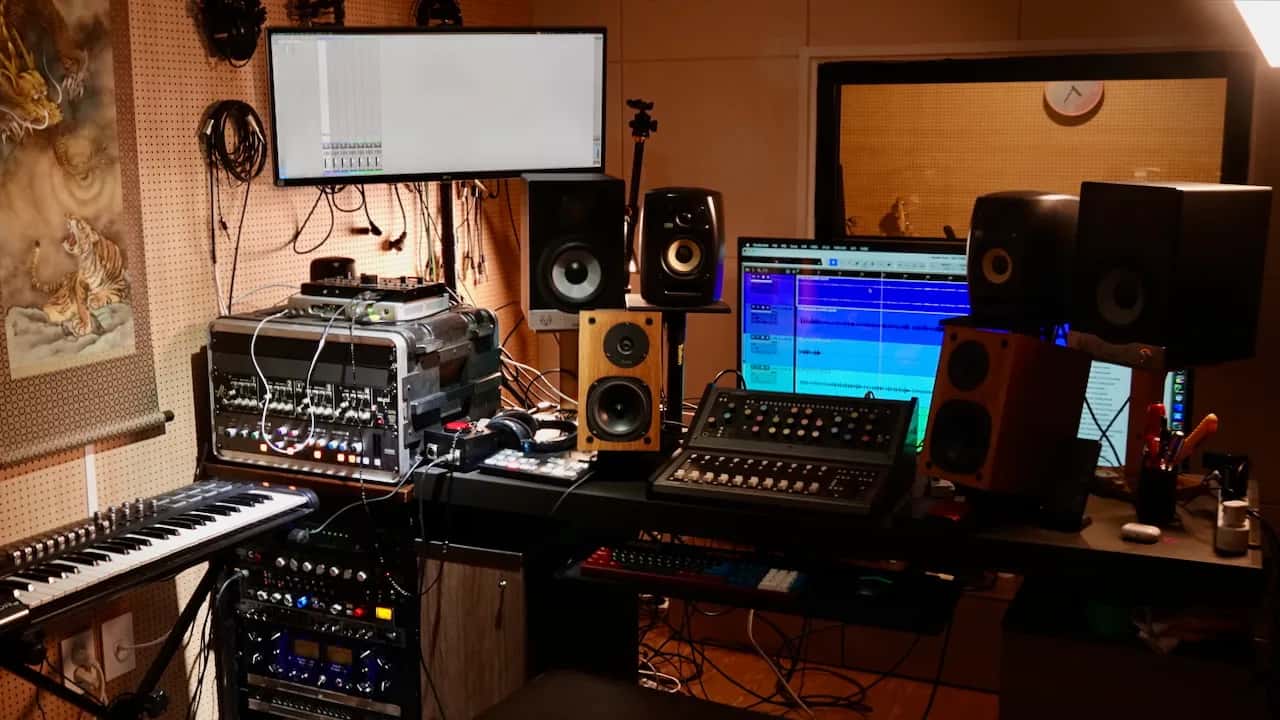
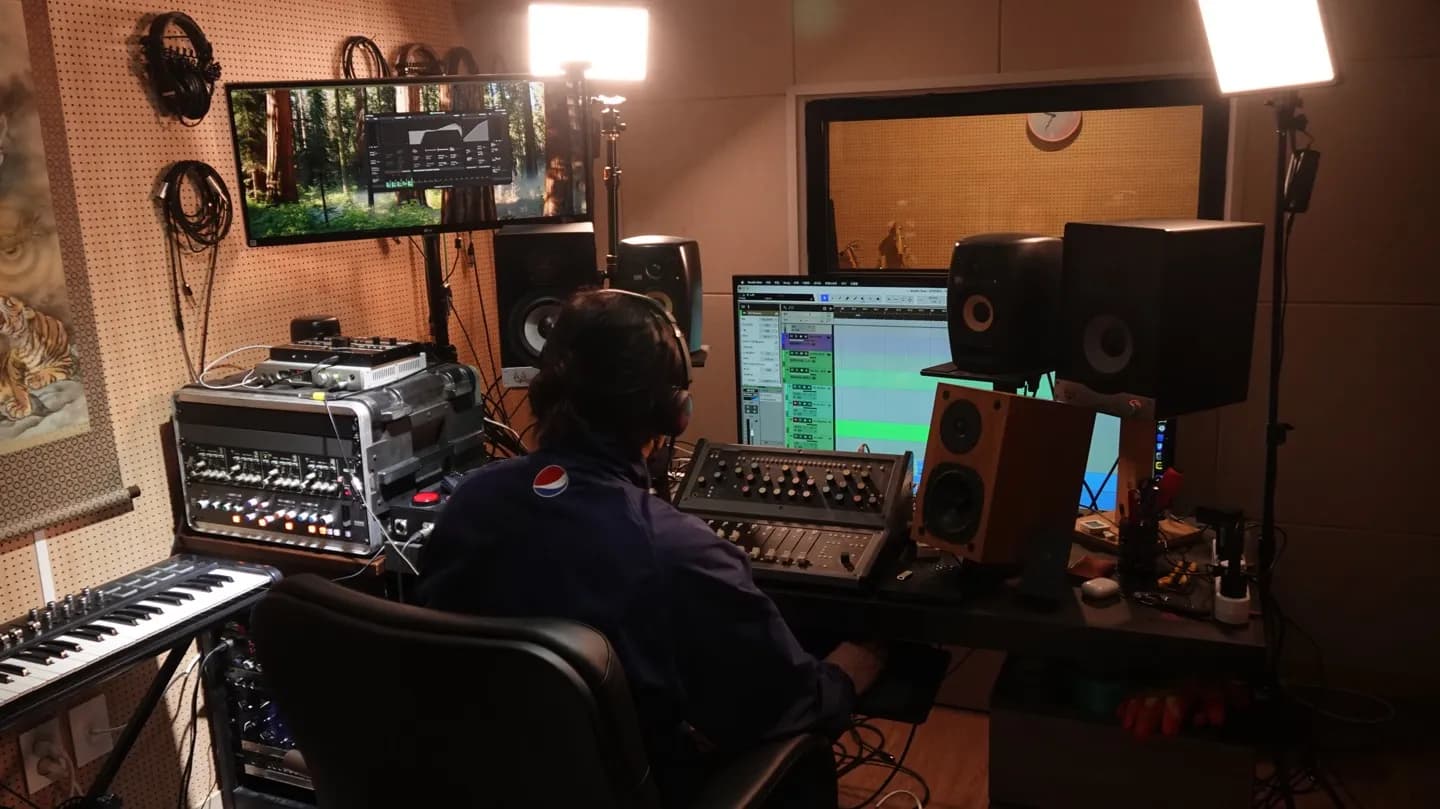
“I bought expensive speakers—why does it sound weird?” Many beginners blame their gear. They expect a 1,000,000‑KRW speaker to sound like 1,000,000 KRW, but instead it feels boomy and smeared.
I guarantee you: the problem isn’t the speakers. The culprit is the room you’re working in.
1. Rooms lie
Sound reaches your ears not only directly from the speakers, but also by bouncing off walls, ceilings, floors, and your desk. Those reflections mix with the direct sound and distort it.
- Some frequencies get louder (boosting)
- Some frequencies cancel each other (cancelling)
Let’s say your room doubles the low end. You’ll think, “The bass is too big,” and cut the lows with EQ. But what happens when you play the mix elsewhere? The bass will be hollow and weak. That’s monitoring distortion.
2. How to improve sound without spending money (realistic tips)
A booth and full acoustic treatment would be great, but we don’t have that budget. Here are realistic room‑tuning tips for home‑recording musicians.
(1) The equilateral triangle rule
This doesn’t cost anything.
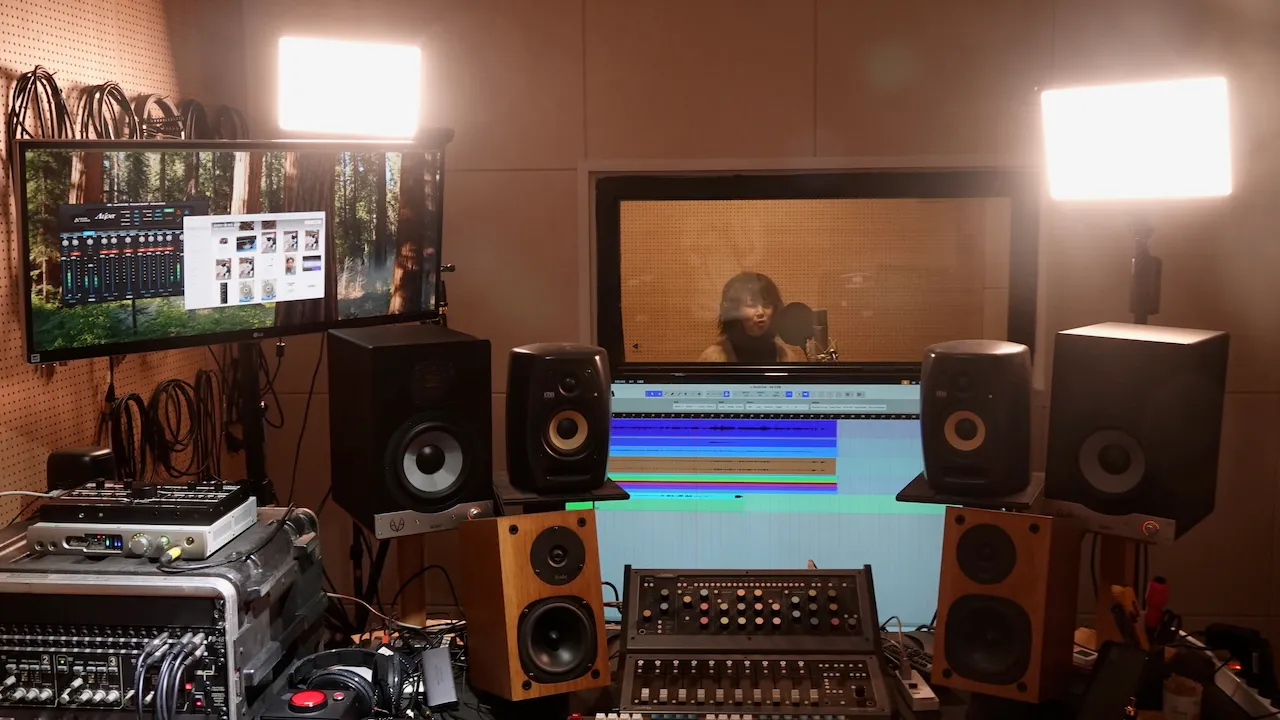
- The left speaker, right speaker, and your head (listening position) should form an equilateral triangle.
- Grab a tape measure. If the distance between speakers is 1 meter, the distance from each speaker to your ears should also be exactly 1 meter.
- Match the height of the speaker tweeters to your ear height. (Only then will the highs be clear!)
(2) Pull speakers away from the wall
If your speakers are right against the wall, the low end wraps around and creates booming. Even if your desk is small, keep at least 20–30 cm from the wall. The sound gets much cleaner.
(3) The power of blankets and closets
No bass traps? You’ve got blankets.
- Room corners are where low end piles up. Roll up thick winter clothes or blankets and stack them there. You’ll get a surprisingly good bass‑trap effect. (Stack them heavy!)
- Hang thick blackout curtains on windows to reduce harsh reflections from glass.
- Lay a rug or carpet on the floor to reduce floor reflections.
3. Headphones are a great alternative
If you can’t fix your room (tiny studio, thin walls, etc.), don’t force speakers. One good pair of headphones is 100 times better than expensive speakers in a terrible room.
Many pro engineers also mix on headphones late at night or in bad rooms. However, headphones fully separate left and right, making it harder to feel space. So check on speakers occasionally, or use “headphone room simulation” plugins.
Your monitoring environment is the glasses of mixing. If your glasses are dirty, the world looks dirty. (Wipe them clean!) Putting on clean glasses is the first step to good mixing.
[Common Beginner Mistakes] 🏠
- “Getting drunk on speaker hype.” Cranking the volume and saying “Wow, this sounds amazing!” That’s a fake thrill added by room resonance. Real skill is when the balance is good at low volume.
- “Magic egg cartons.” Sticking egg cartons on the wall doesn’t make the sound better. It can even make it dull by absorbing only certain frequencies.
- “Pressed against the wall.” If your speakers are kissing the wall, the bass will boom and ruin the mix. Pull them at least a hand’s width away.