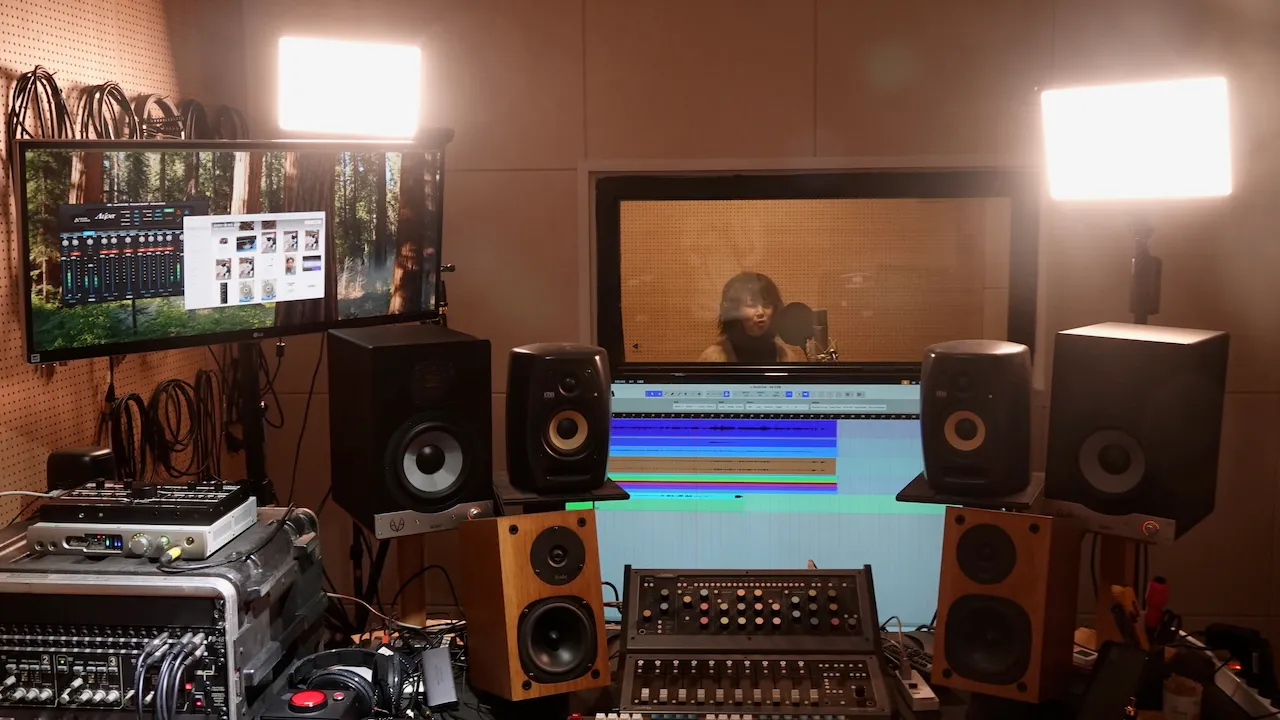
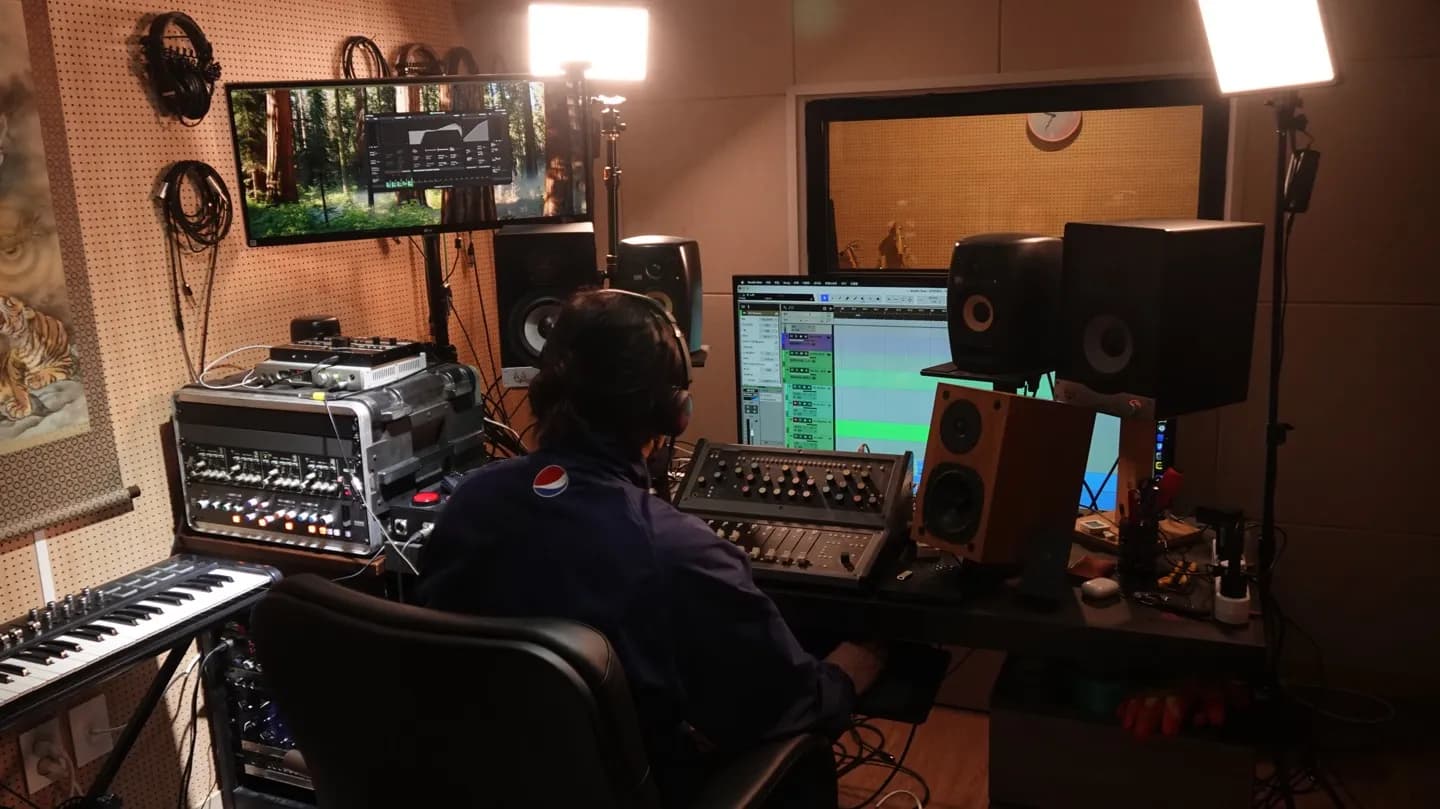
"I mixed, but everything is piled in the center. It feels cramped." (Stuffy!) That’s like putting every musician on stage in one tight line. Today we’ll open the stage and give each instrument its own seat—the magic of panning. (Let’s spread out!)
1. What is pan?
Panning decides where a sound sits between left and right. We have two ears. If the left speaker is louder, our brain says, “That’s on the left.” (Easy!)
Using this simple principle, we give a 2D mix width. (Wide!)
2. The golden rules of panning: aesthetic balance
There’s no single correct answer, but there is a timeless golden placement. (Classic!)
(1) Center: the pillars
The most powerful and important sounds must stay in the center.
- Kick & snare: the rhythmic core.
- Bass: the foundation. (Low end is less directional; center makes the mix solid.)
- Lead vocal: the protagonist.
(2) Hard L/R: spread wide
Don’t be afraid to go all the way!
- Double‑tracked guitars: Record twice and pan 100% left/right. The mix suddenly feels huge. (Wow!)
- Overheads: spread the drum space.
(3) Mid positions: seasoning and background
- Piano, synth, acoustic guitar: find a place around 30–70% that doesn’t fight the vocal.
- Percussion (shaker, tambourine): toss to one side for life and sparkle. (Chime!)
3. LCR panning: the beauty of simplicity
“Left 15°, right 23°... too hard!” (Headache.) Try LCR panning instead. Use only L (Left), C (Center), R (Right).
- Many pro engineers mix using only these three positions.
- Advantage: the mix becomes clear and separation improves dramatically. It can sound more professional than a vague center‑heavy mix. (For real!)
4. [Studio Episode] Panning to protect the vocal
I once mixed a dense band song with dozens of instruments. No matter how much I raised the vocal, it got buried. (Tough.)
Instead of EQ, I reached for the pan knobs. I pushed centered electric guitars and synths out to 70% left and right. (Slide‑slide.) Suddenly, a huge space opened in the center—like the Red Sea parting—and the vocal stood proudly there. (Miracle!)
[Studio tip]:
- Don’t fight the vocal: If the vocal is buried, move the other instruments aside. Panning alone can bring clarity back.
5. Sense of balance: the seesaw
The key in panning is weight. If a guitar sits on the left, something with similar energy should balance it on the right (piano, another guitar). If the mix leans to one side, listeners feel fatigue and think, “Is my ear weird?”
Panning is the design of mixing. Close your eyes and imagine the stage: drums in back, bass beside, guitars on the sides, vocal in front. Your pan knobs will take a photo of that stage. (Click!)
[Common Beginner Mistakes] ↔️
- "Everyone is the main character": Kick, bass, vocal, chorus, guitars—all in the center. They fight, and the vocal disappears. (No brawls!)
- "Tiny pan moves": Only 10–20% pans. The mix doesn’t get wider; it just gets messy. If you pan, be bold (64–100%).
- "Lopsided mix": Three guitars on the left, empty on the right. Listeners get tired fast. Balance the weight.